Training begins long before anyone enters the room.
When Parents International works with local partners, we do not start from a ready-made handbook and simply deliver it unchanged. We start by listening. Local partners tell us about current challenges, classroom realities and community needs. We propose possible topics, discuss priorities, adapt the structure and refine the activities together.
This is the approach behind our new booklet, Training in Africa Programme: Ghana 2026, which tells the story of our two-day teacher training delivered in Accra, Ghana, in partnership with Parenting Education Network Ghana.
Over 50 teachers of children aged 0–11 took part in practical, participatory sessions on critical thinking, positive discipline and problem-solving, with digital and information literacy running across the programme. Some participants had already joined earlier trainings. Their voluntary return was positive feedback in itself, and a clear sign of commitment to continued professional learning.
The booklet captures what happened in the room, what worked, what challenged us, and what we are taking forward.
The training was built around active participation. Teachers discussed real classroom situations, took part in role-play and simulation, moved, reflected, worked in groups and developed individual activity plans. These plans were then shared with other participants, helping to create the foundations for a local community of practice.
The booklet also names the challenges we observed with honesty and respect. Positive discipline techniques still need practice and support. Digital tools, including AI and social media platforms, are being used widely, but digital literacy and source verification need strengthening. Teachers also reflected on adult cooperation, assumptions about families and children, and the need for clearer guidance on sedentary screen time for young children.
Just as importantly, the booklet highlights the strengths present in the room: active participation, peer support, reflection, openness to new perspectives and a strong connection to classroom use. These are not abstract outcomes. They are the foundations on which future training, school-family cooperation and community support can grow.
The final section of the booklet also links readers to practical resources from the Parent Help Library, including guides on digital literacy, trauma-informed education, stakeholder engagement and family support.
The work does not end when a training session ends. It continues when teachers adapt ideas, share them, test them and build stronger relationships around children.
That is what we saw in Ghana. And that is what we will continue to support.
The Digital Transformation Unit of the Education and Higher Education Department of the Council of Europe invited Parents International to contribute to a Policy Lab on Artificial Intelligence in Education. The event that took place on 22-24 June 2026 in the inspiring environment of the Budapest European Youth Centre was part of our collaboration on a growing number of topics.
The aim of the event was to pilot and test a policy tool that will be part of a toolkit to be further tested together and published later in the year. The tool uses a combination of the futures literacy lab methodology – that has long been used by experts of UNESCO, the OECD, and other organisations – and new, AI assisted tools that help the creation of policy experiments.
The event used the premise that AI is already being used by people, including school students and their families, and also to a growing extent by school professionals. It was also based on the Council of Europe’s core belief that AI should be human-centred, and needs to be explored from this perspective.
The event gathered government representatives, civil society actors, researchers, and stakeholder representatives. This combination has already created interesting discussions on the necessity of school and whether school systems have served their purpose, outlived their usefulness, and should be abolished. It was interesting to hear arguments that are very similar to the ones we hear from the growing number of parents who have already taken their children out of the system or are considering leaving school.
On the first day, there were opportunities to get to know each other, and to establish the frame of the coming days.
On the second day, participants were encouraged to imagine probable, desirable and also weird futures without the aim of reaching a consensus. This helped everybody to understand the present better with surprisingly convergent views on what the future may bring, and especially on what it should bring.
On the third day, participants were assigned roles, mostly ones that were very different from their actual role. Through various iterations, using the tools the Council of Europe wanted to test, the outcome was a refreshingly unique policy experimentation proposal that was building on some key factors related to AI and education:
The landscape is evolving so fast, that traditional policy making informed by peer reviewed research is not suitable anymore.
If we want to close the growing gap between what happens at school and the real life that is basically outside of school, we need to abandon the ideas of bans and restrictions on what can and cannot be used, but need to embrace the fact that people, including children are using AI tools they fancy, including ones that are now formally forbidden or becoming unreachable in Europe without a VPN.
That the presence of AI made a whole school and whole community approach even more important, the active collaboration of education professionals, policy makers, non-formal and informal educators, tech companies, and other actors.
While many professional educators are actively experimenting with AI, they need support and strong scaffolding to become impactful educators in the AI-penetrated reality. It means a wide range of scaffolding elements from competence development trainings to detailed recommendations of endorsed tools that can be used in the classroom and school contexts for various tasks.
As a result, they can also provide their colleagues and students – and if requested, also the parents – with good scaffolding for their individual choices and encounters with AI.
The result is a dummy policy proposal and pilot project plan with the very suggestive title Before the Landscape Changes: A Rapid Probe into What Schools Actually Need to Learn with AI. From our own perspective, we must celebrate its scaffolding and non-prescriptive approach that has been shared by the participants.
The tools piloted did not only provide a wide playing field for brainstorming, learning, and building new relations, but they will also serve our team when developing tailored trainings.
Parents International had the privilege of participating in the European Consortium for Sociological Research (ECSR) Conference 2026, hosted in the remarkable surroundings of Trinity College Dublin on 15-17 June. Bringing together leading sociologists, researchers, and practitioners from across Europe and beyond, the conference provided a stimulating space for discussing some of the most pressing challenges facing our societies today.
For many participants, the setting itself was a source of inspiration. Trinity College, with its centuries-old history, beautiful architecture, and vibrant academic atmosphere, offered a fitting backdrop for conversations about the future of education, social cohesion, and institutional trust. Walking through the historic campus, one could not help but reflect on the role educational institutions have played – and continue to play – in shaping societies. The contrast between the college’s rich educational heritage and the rapidly changing realities facing schools today made many of the discussions feel even more relevant.
Among the many fascinating sessions, some featured colleagues from our EFFEct project, but interesting presentations did not stop here. From siblings’ effect on academic outcomes to the relationship between child poverty and academic outcomes, many papers had relevant information for our own research, and also offered opportunities for raising questions.
We were delighted to present our paper, “Broken Education Ecosystems: Misalignments Between Families and Schools in Hungary and the Netherlands.” The presentation generated a lively discussion and thoughtful questions from colleagues working in sociology of education, inequality, governance, and family studies. Time was short, but we continued in the coffee break – and will probably continue doing so after the event.
When Schools and Families Misunderstand Each Other
Our research starts from the fact that education does not happen only in schools, or rather mostly happens outside of it. Children learn within a broader educational ecosystem that includes families, schools, communities, and peer networks. While schools are formal providers of education, families remain children’s primary and lifelong educators.
The school closures of 2020-22 and the crises that followed highlighted how interconnected these actors are. At the same time, they revealed significant weaknesses in the relationships between them. Despite decades of research demonstrating the importance of family-school collaboration, schools and families frequently operate in parallel rather than in partnership.
Using survey and discussion data collected in Hungary and the Netherlands as part of a larger international research project spanning sixteen countries, we explored how parents, students, teachers, and school leaders understand the purpose of schooling, how they evaluate schools’ performance, and how they perceive one another’s expectations.
Misalignment Rather Than Disengagement
One of the most striking findings presented was that the barriers to collaboration are often rooted in misunderstanding rather than lack of commitment.
Teachers frequently assume that parents are primarily concerned with academic achievement or preparation for the labour market. Parents and students, however, place much greater emphasis on social-emotional development, fairness, well-being, and feeling supported. Similarly, teachers often interpret limited parental presence in school activities as a lack of interest, while parents report feeling unwelcome, unheard, or constrained by school practices that do not accommodate their realities.
These patterns were particularly pronounced in Hungary, but they also appeared in the Dutch context despite generally higher levels of trust between stakeholder groups.
Importantly, our findings challenge the widespread narrative of parental apathy. Across both countries, parents consistently expressed strong concern for their children’s education and well-being. The issue is not that families do not care; rather, schools and families often operate with different assumptions about what matters most and how collaboration should take place.
Educational Ecosystems Can Be Repaired
The concept of a “broken educational ecosystem” that we are discussing a lot lately does not imply that schools, teachers, or families are failing. Instead, it highlights the cumulative effects of misaligned expectations, communication barriers, and institutional cultures that prevent meaningful collaboration.
Our research suggests that repairing these ecosystems requires more than formal policies mandating parental involvement, namely, a drastic shift towards parental engagement. Genuine change depends on building trust, creating inclusive opportunities for participation, and supporting school leaders and education professionals to engage parents and families as equal partners with school.
From a sociological perspective, the findings also remind us that educational outcomes are shaped not only by resources and policies but also by relationships, power dynamics, and institutional cultures. Understanding these dynamics is essential if schools are to remain trusted institutions capable of supporting both learning and social integration in increasingly complex societies.
Looking Ahead
The discussions at ECSR 2026 reinforced the importance of bringing together researchers, practitioners, and families to address these challenges collaboratively. We left Dublin inspired – not only by the beautiful surroundings of Trinity College, but also by the energy, curiosity, and commitment of colleagues working on research with the aim of better understanding how education systems can become more equitable, inclusive, and responsive.
We look forward to continuing these conversations and sharing further findings from our ongoing work on educational ecosystems, parental engagement, and the future of family-school partnerships.
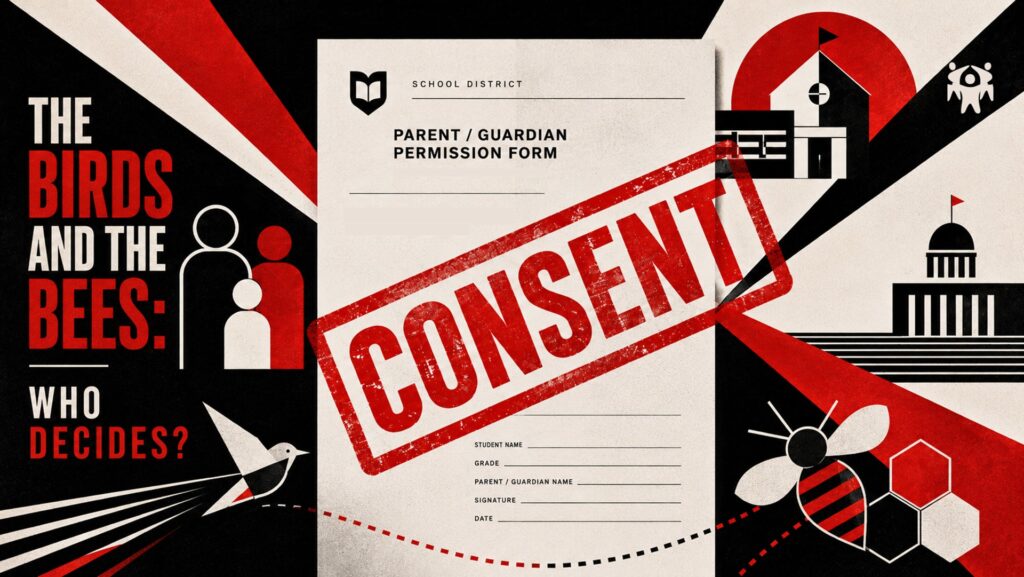
The Valditara Law and the debate on parental engagement in education
There are several topics that regularly stir conflict and public debate in various parts of the world, and highlight the tension between the rights of parents to educate their children according to their own values and culture – ensured by law in all countries that ratified the UN Convention on the Rights of the Child – and the wish of policy makers and professionals to make the related decisions for and not with parents. Sexual education – along with nutrition literacy – is the most prominent of these topics.
The recent approval of the so-called Valditara Law in Italy, formally Law no. 104 of 9 June 2026 on informed consent in schools, is a typical example that has generated significant controversy. The law, promoted by the Ministry of Education and Merit under Minister Giuseppe Valditara (the law is named after in public discourse), has drawn intense criticism from several organisations, political parties, unions, teachers, and private citizens.
At Parents International, we are guided by the principles established by the Convention, which recognises that parents have the primary responsibility for the upbringing and development of their children. This does not mean that parents have free rein to do whatever they want, but it cannot be limited in an arbitrary way (while it can be restricted in individual cases by the court). However, it does mean that they have a primary role in deciding on all aspects of the education and development of their own children.
The Convention has been ratified by almost every country in the world, with the United States being the only exception. Tensions concerning the application of its principles are likely to arise as a consequence of each nation’s different cultural, educational, religious and political context. These tensions should be discussed openly, especially whenever children are involved.
The concerns raised by critics can be summarised as follows. First, they argue that the law may deprive children of access to Comprehensive Sexuality Education, commonly referred to as CSE. Second, they see the law as a step backwards from previous achievements in the field of civil rights and equality. Third, they fear that the parents’ right to withhold consent (that is guaranteed by international treaties) may create educational inequalities, with some children receiving information and others being excluded from it. Fourth, they argue that the law may harm vulnerable children, especially those who suffer abuse or harmful behaviour within the family, because it may prevent them from acquiring knowledge and tools that could help them recognise danger.
These are serious concerns that should not be dismissed lightly, since any question concerning children’s safety, dignity, protection from abuse, emotional development and access to reliable information deserves careful attention. However, they need to be considered alongside another fundamental principle: with the exception of limited and extraordinary circumstances, parents are the primary educators of their children. The State and the school system have important responsibilities, but they do not replace parents by default.
The law introduces two main sets of provisions:
It excludes school activities concerning sexuality-related topics in pre-primary and primary school, without prejudice to the ordinary national curriculum.
For lower and upper secondary schools, it requires schools to inform parents in advance when sexuality-related topics are addressed through specific projects or activities, especially when external experts are involved. Parents must be able to know the aims, contents, methods, materials and people involved, and their written consent is required for a child to participate in such activities.
There are legitimate questions that can be raised concerning the specific wording of the law, the appropriateness of the age threshold, and the clarity of the terminology. However, the general principle that parents should be informed, that they should have access to the materials used with their children, and that their consent should be required for sensitive activities is not unreasonable. It is, in fact, common sense.
Informed consent, sensitive topics, and the role of parents
This is particularly true when the topic is CSE. Proponents often maintain that CSE is broader than “sex education”, as it concerns bodies, emotions, relationships, consent, respect, safety, family life and rights. If this is the case, then parental engagement becomes more necessary, not less, and part of the process of engaging families is providing accurate, transparent information. The wish to keep these areas of education in the family has been explicitly and openly expressed by parents and their organisations.
The fundamental point is not whether children should learn about emotions, relationships, respect, bodies, boundaries or safety, but who decides when certain knowledge is introduced, how it is framed, by whom it is presented, and with which materials. For ordinary families, the default answer can be neither the State nor the school system: it must be the parents.
The existence of exceptional cases in which abuse, coercion, violence and neglect threaten the child’s best interests is undeniable, but those cases have clear judicial procedures, and their existence doesn’t constitute a reasonable basis for treating all parents as unreliable educators. Parents still carry the first responsibility for the upbringing and development of their children, and their right to this is guaranteed as long as a country is party to the Convention.
From this perspective, some reactions to the law are genuinely troubling. The objection is not always simply that parents may need better information. In some cases, the objection appears to be that families cannot be trusted to teach children what is “right”. That is a very different claim, and it should be stated openly if it is indeed the basis of the criticism.
From conflict to a healthier education ecosystem
The deeper disagreement, therefore, concerns the education ecosystem itself. Does the school primarily serves to support families in the education of children as stated in the Convention, or is it also called to correct, replace or transform family values when those values are judged inadequate? This question has a long intellectual history. It can be traced, in different ways, through Marx’s critique of the bourgeois family, Gramsci’s theory of cultural hegemony, and Freire’s understanding of education as a practice of liberation. These authors raised real questions about power, class, oppression, culture and social transformation that cannot be dismissed lightly, and they have made valuable contributions to the discourse on education, but bypassing parents is not the way forward.
Both research and practical experience show that meaningful educational change is far more likely to succeed when families are actively engaged. Parents should know that information, training and support are available whenever they choose to discuss delicate topics with their children, but this must remain an opportunity, not coercion. This is also consistent with the broader principle often expressed as “nothing about them without them”. The phrase is widely used in rights-based advocacy to insist that those affected by a policy should not be excluded from the decisions made in their name.
If this is true for children, it must also be true for the families who carry the primary responsibility for their upbringing. There should be nothing about children’s moral, emotional and affective formation without the meaningful engagement of their parents.
There is another contradiction that deserves attention. In the Reggio Emilia Approach, inspired by Loris Malaguzzi, the child is recognised as capable, competent, and rich in potential. This strong image of the child with agency is one of the great contributions of that educational tradition. Yet the same recognition is not always extended to parents. Children are often described as competent, while parents are too quickly treated as obstacles, especially when their cultural, ethical or religious convictions differ from those of institutions or activists.
This is not only not aligned with the ethos of the convention, but it also does not provide a sustainable foundation for a healthy educational ecosystem, the village that is necessary to raise a child.
Children normally live within families. Long before they start attending school, children begin learning about emotions, relationships and boundaries through family life and social interaction: through the daily experience of being loved, corrected and supported, and by observing how adults treat one another. They form their ethical orientation not only through explicit instruction, but through example.
As Parents International, we do not dispute the validity of the concerns raised, and we do not pass judgement on anyone’s political or ethical position. We do, however, strongly affirm the need to support parents in fulfilling their responsibilities as the primary educators of their children properly. This includes their freedom of choice, exercised within the framework of the UN Convention on the Rights of the Child.