In this Article
The Valditara Law and the debate on parental engagement in education
There are several topics that regularly stir conflict and public debate in various parts of the world, and highlight the tension between the rights of parents to educate their children according to their own values and culture – ensured by law in all countries that ratified the UN Convention on the Rights of the Child – and the wish of policy makers and professionals to make the related decisions for and not with parents. Sexual education – along with nutrition literacy – is the most prominent of these topics.
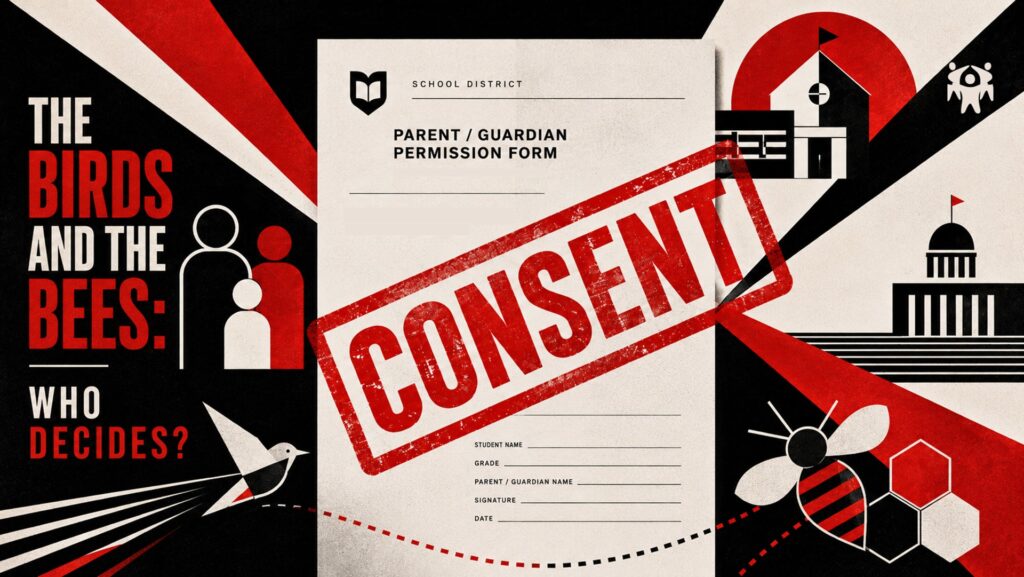
The recent approval of the so-called Valditara Law in Italy, formally Law no. 104 of 9 June 2026 on informed consent in schools, is a typical example that has generated significant controversy. The law, promoted by the Ministry of Education and Merit under Minister Giuseppe Valditara (the law is named after in public discourse), has drawn intense criticism from several organisations, political parties, unions, teachers, and private citizens.
At Parents International, we are guided by the principles established by the Convention, which recognises that parents have the primary responsibility for the upbringing and development of their children. This does not mean that parents have free rein to do whatever they want, but it cannot be limited in an arbitrary way (while it can be restricted in individual cases by the court). However, it does mean that they have a primary role in deciding on all aspects of the education and development of their own children.
The Convention has been ratified by almost every country in the world, with the United States being the only exception. Tensions concerning the application of its principles are likely to arise as a consequence of each nation’s different cultural, educational, religious and political context. These tensions should be discussed openly, especially whenever children are involved.
The concerns raised by critics can be summarised as follows. First, they argue that the law may deprive children of access to Comprehensive Sexuality Education, commonly referred to as CSE. Second, they see the law as a step backwards from previous achievements in the field of civil rights and equality. Third, they fear that the parents’ right to withhold consent (that is guaranteed by international treaties) may create educational inequalities, with some children receiving information and others being excluded from it. Fourth, they argue that the law may harm vulnerable children, especially those who suffer abuse or harmful behaviour within the family, because it may prevent them from acquiring knowledge and tools that could help them recognise danger.
These are serious concerns that should not be dismissed lightly, since any question concerning children’s safety, dignity, protection from abuse, emotional development and access to reliable information deserves careful attention. However, they need to be considered alongside another fundamental principle: with the exception of limited and extraordinary circumstances, parents are the primary educators of their children. The State and the school system have important responsibilities, but they do not replace parents by default.
The law introduces two main sets of provisions:
- It excludes school activities concerning sexuality-related topics in pre-primary and primary school, without prejudice to the ordinary national curriculum.
- For lower and upper secondary schools, it requires schools to inform parents in advance when sexuality-related topics are addressed through specific projects or activities, especially when external experts are involved. Parents must be able to know the aims, contents, methods, materials and people involved, and their written consent is required for a child to participate in such activities.
There are legitimate questions that can be raised concerning the specific wording of the law, the appropriateness of the age threshold, and the clarity of the terminology. However, the general principle that parents should be informed, that they should have access to the materials used with their children, and that their consent should be required for sensitive activities is not unreasonable. It is, in fact, common sense.
Informed consent, sensitive topics, and the role of parents
This is particularly true when the topic is CSE. Proponents often maintain that CSE is broader than “sex education”, as it concerns bodies, emotions, relationships, consent, respect, safety, family life and rights. If this is the case, then parental engagement becomes more necessary, not less, and part of the process of engaging families is providing accurate, transparent information. The wish to keep these areas of education in the family has been explicitly and openly expressed by parents and their organisations.
The fundamental point is not whether children should learn about emotions, relationships, respect, bodies, boundaries or safety, but who decides when certain knowledge is introduced, how it is framed, by whom it is presented, and with which materials. For ordinary families, the default answer can be neither the State nor the school system: it must be the parents.
The existence of exceptional cases in which abuse, coercion, violence and neglect threaten the child’s best interests is undeniable, but those cases have clear judicial procedures, and their existence doesn’t constitute a reasonable basis for treating all parents as unreliable educators. Parents still carry the first responsibility for the upbringing and development of their children, and their right to this is guaranteed as long as a country is party to the Convention.
From this perspective, some reactions to the law are genuinely troubling. The objection is not always simply that parents may need better information. In some cases, the objection appears to be that families cannot be trusted to teach children what is “right”. That is a very different claim, and it should be stated openly if it is indeed the basis of the criticism.
From conflict to a healthier education ecosystem
The deeper disagreement, therefore, concerns the education ecosystem itself. Does the school primarily serves to support families in the education of children as stated in the Convention, or is it also called to correct, replace or transform family values when those values are judged inadequate? This question has a long intellectual history. It can be traced, in different ways, through Marx’s critique of the bourgeois family, Gramsci’s theory of cultural hegemony, and Freire’s understanding of education as a practice of liberation. These authors raised real questions about power, class, oppression, culture and social transformation that cannot be dismissed lightly, and they have made valuable contributions to the discourse on education, but bypassing parents is not the way forward.
Both research and practical experience show that meaningful educational change is far more likely to succeed when families are actively engaged. Parents should know that information, training and support are available whenever they choose to discuss delicate topics with their children, but this must remain an opportunity, not coercion. This is also consistent with the broader principle often expressed as “nothing about them without them”. The phrase is widely used in rights-based advocacy to insist that those affected by a policy should not be excluded from the decisions made in their name.
If this is true for children, it must also be true for the families who carry the primary responsibility for their upbringing. There should be nothing about children’s moral, emotional and affective formation without the meaningful engagement of their parents.
There is another contradiction that deserves attention. In the Reggio Emilia Approach, inspired by Loris Malaguzzi, the child is recognised as capable, competent, and rich in potential. This strong image of the child with agency is one of the great contributions of that educational tradition. Yet the same recognition is not always extended to parents. Children are often described as competent, while parents are too quickly treated as obstacles, especially when their cultural, ethical or religious convictions differ from those of institutions or activists.
This is not only not aligned with the ethos of the convention, but it also does not provide a sustainable foundation for a healthy educational ecosystem, the village that is necessary to raise a child.
Children normally live within families. Long before they start attending school, children begin learning about emotions, relationships and boundaries through family life and social interaction: through the daily experience of being loved, corrected and supported, and by observing how adults treat one another. They form their ethical orientation not only through explicit instruction, but through example.
As Parents International, we do not dispute the validity of the concerns raised, and we do not pass judgement on anyone’s political or ethical position. We do, however, strongly affirm the need to support parents in fulfilling their responsibilities as the primary educators of their children properly. This includes their freedom of choice, exercised within the framework of the UN Convention on the Rights of the Child.
Emanuele Bertolani

