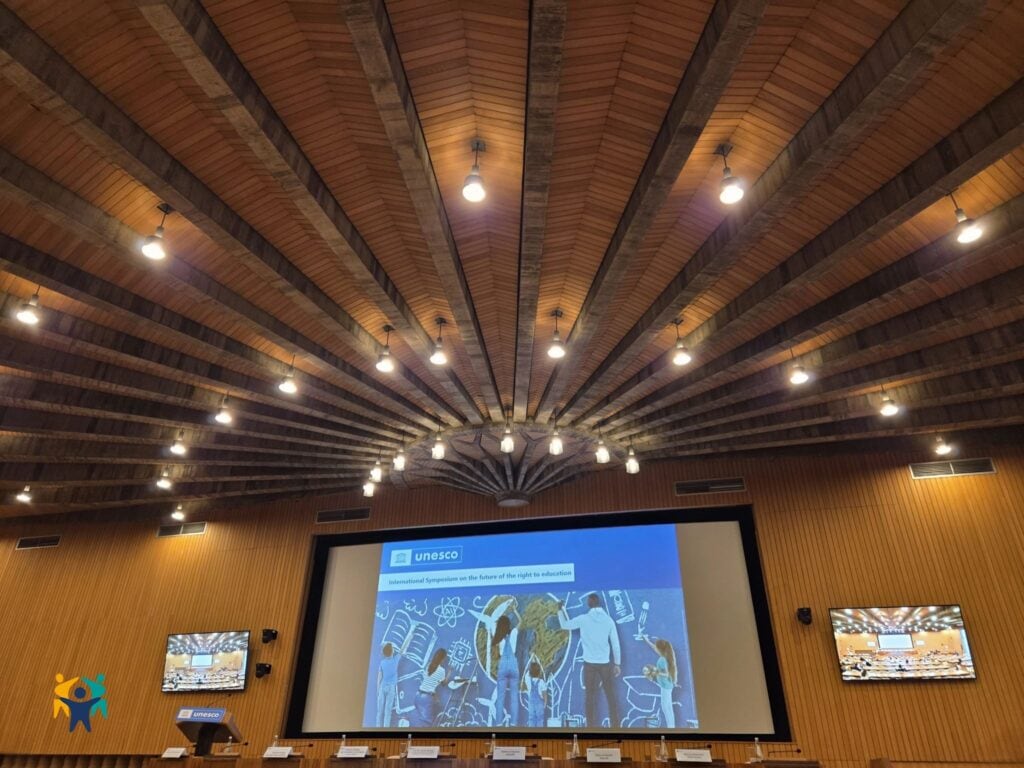
Parents International 2025: Where the Year Took Us
In this Article
In a year shaped by fast-moving challenges for children, families, and schools, it is easy for meaningful work to become fragmented across meetings, projects, and publications. To make our work easier to follow and easier to use, we have compiled a single, navigable overview: “Where the Year Took Us”.
This Parents International resource summarises what we delivered in 2025 across research, advocacy, training, and EU-funded collaboration. It is designed for parents’ representatives, educators, school leaders, researchers, and policymakers who want a clear picture of where we worked, what we produced, and how each strand connects to practical impact for children and their families.
Parents International in 2025 at a glance
The report opens with a concise snapshot of the year. In 2025, Parents International reached 16 countries through 31 engagements, contributed to 8 EU-funded projects, developed 3 handbooks, and submitted 6 research papers.
These figures matter because they reflect a strategic choice: we aim to ensure that the parental voice is present where evidence is produced and where policies are shaped, while also translating research into tools that can be applied in schools and at home.
Where the year took us
A dedicated section lists our engagements across countries and cities, from conferences and forums to workshops and targeted training sessions. The 2025 map includes events and meetings in Belgium, Cyprus, France, Germany, Ghana, Greece, Hungary, Ireland, Italy, Kazakhstan, Lithuania, the Netherlands, Norway, Slovenia, Spain, and Uganda.
This geographic spread is not a tourism narrative. It reflects how our work operates in practice: building partnerships, testing approaches in real settings, and ensuring that guidance is informed by lived experience, professional realities, and the evidence produced through pilots and evaluation.
Projects that made scale possible
The report explains how collaborative, publicly funded projects enable Parents International to test ideas at scale, identify what works, and share results in usable formats. It also clarifies the purpose of this approach: connecting universities, schools, civil society, and decision makers so parental engagement and child participation are treated as core factors in educational quality, wellbeing, and rights protection.
In 2025, the highlighted projects include:
- PARTICIPATE, training doctoral researchers to advance parent-focused cyberbullying prevention, policy, and practice.
- DRONE, strengthening digital literacy and resilience to disinformation through research, piloting, and training for teachers and parents.
- DEMOCRAT and EFFEct, supporting rigorous work on democratic education and the evaluation of education systems and policies.
- Kitchen Adventure, combining culinary learning, family bonding, healthier diets, and sustainability.
- BioBeo Foodity, developing education on lifestyle, circularity, and bioeconomy, including practical approaches to healthier and more sustainable cooking.
- PERFECT, developing transversal competences through local history projects that link arts and digital skills.
Across these initiatives, the shared objective is consistent: strengthen learning ecosystems through partnership, practical tools, and evidence that can withstand scrutiny.
Handbooks and resources that translate evidence into practice
A core message in the report is that resources must be more than well-intended advice. In 2025, Parents International developed three key resources as part of EU-funded project work: BioBeo Guide, The Missing Link, and A Guide to Introducing Potentially Traumatic Topics.
The report is explicit about quality standards: these are research-based, validated materials, built through international collaboration, piloting, and evaluation, then shaped into guidance and tools that are ready to be adapted by educators, school leaders, and families in different contexts.
It also points readers to the wider ecosystem of materials available through the Parent Library, reinforcing a principle we return to consistently: good practice must be usable, not merely persuasive.
Research output grounded in real-world questions
As a research institution, Parents International contributed to studies across its core themes, including parental engagement, inclusion, bullying and cyberbullying prevention, and effective approaches to education. The report lists six papers submitted for publication in 2025, covering topics such as community learning and digital literacy, parenthood across cultures, online safety and AI challenges, parents as child-rights advocates, migrant parent participation, and lessons from fractured education ecosystems.
Several entries emphasise a recurring conclusion across project data: families play a central role in children’s digital lives, while many schools still need stronger preparation and partnership structures to meet current demands.
Highlights from 2025
The highlights section captures what our public engagements are intended to achieve: sharing evidence and experience, translating research into usable guidance, and bringing parental perspectives into spaces where decisions are made.
Among the featured examples:
- At the World Anti-Bullying Forum in Stavanger, a doctoral candidate presented a scoping review on whether witnessing or experiencing adults’ violence or bullying is linked to later peer-bullying perpetration.
- Two online sessions at the VII Global Stop Cyberbullying Telesummit examined adults’ roles in cyberbullying, including how parents and teachers can act as both protectors and perpetrators, and how teacher bullying can remain hidden while harming children’s trust.
- A webinar co-organised by the Council of Europe and European Schoolnet, within the European Year of Digital Citizenship Education 2025, focused on digital wellbeing and amplifying young people’s voices, with Parents International highlighting parents as key drivers of children’s digital wellbeing.
How to use this resource
“Where the Year Took Us” is designed to be browsed quickly and revisited. The report invites readers to click through linked content to explore projects, resources, and publications in more depth.
If you work with families, schools, or education policy, we encourage you to use the report as:
- a concise overview of Parents International’s priorities in 2025,
- a gateway to validated resources and practical guidance,
- a reference point for partners who want evidence-informed collaboration.
Download and explore “Parents International 2025: Where the Year Took Us” and share it with your network.
More from Parents International
Student Achievement: School, Family, Community
Parents International Training in Uganda – A wonderful journey of mutual discovery
Real Partnership, Real Impact: Parents International Training in Ghana 2025