Lastly, install an event snippet for each of your goals to measure website conversions
Copy the snippet below and paste it in between the
tags of the page(s) that you'd like to track, right after the Google tag
Recently, our constant quest for building alliances for online safety took us to London. Our PhD candidate in the framework of the PARTICIPATE project, Luca Laszlo, is currently doing her non-academic secondment at the UK based organisation, Youthworks. For the first days of her stay, Eszter Salamon also joined her, and they enjoyed the hospitality of the wonderful Adrienne Katz together. Who did not only make them the most wonderful chocolate cake, but also set up many meetings. They met:
Liane Katz FRSA is the co-founder of MAMA.codes – Raising Digital Kids, a company teaching children (and their parents) coding and basic online safety from a very young age in a fun and accessible way. They are soon to launch an app that will make this available completely remotely. If you are interested in testing it, let us know!
Carmel Glassbrook works at SWGfL, operating a helpline for professionals working with children to support them with online safety issues.
Gary Thomas is the director of NYAS (National Youth Advocacy Service), a service for care-experienced young people in England and Wales that ensures their agency. They visited the Mumsnet office, a forum that provides a space for parents to discuss whatever they wish. That has a very strong policy influence. They visited the office of ParentZone, and learned about the work they do, and found that we agree on many things, and found a strong ally supporting parents and childrens rights in the digital space. They also submitted an abstract together for a paper, and set the foundations for the advocacy toolkit as described in the PARTICIPATE project.
A meeting was arranged with Ofcom, the UK media authority, too. Our team was informed in advance that it is forbidden to mention the current hot topic, the planned social media plan, and it made the meeting somewhat awkward. One of their tasks is to support media literacy and digital well-being, so they were interested in our collaboration with the Council of Europe having to information about their work on digital citizenship education, recent tools developed in the Sails, Democrat and Drone projects, and shocked by our research data from Drone, EFFEct and Participate.
Luca is supporting Adrienne with her project on the exploitation of young people online as part of her secondment.
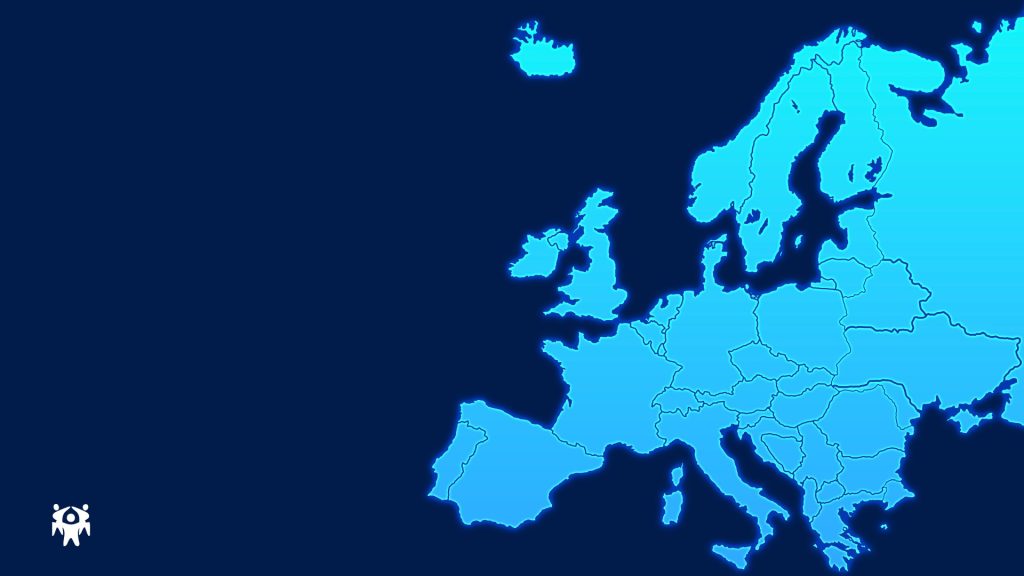
A glowing map of the European Union visualising the theme of civic space and democratic renewal in 2026.
In this Article
Civic Space in Europe 2026: Strasbourg conference sets the stakes
The International Conference “Shaping democratic renewal: civic space and the path to a New Democratic Pact for Europe” took place in Strasbourg on 2–3 February 2026, bringing together senior officials, government representatives, experts, and civil society from across Europe. In the opening session, the Secretary General of the Council of Europe, Alain Berset, and the Council of Europe Commissioner for Human Rights, Michael O’Flaherty, set the tone for two days of debate on how to safeguard and renew democracy by protecting civic space.
Alain Berset warned that Europe is once again at a democratic “turning point”, recalling Václav Havel’s message that the continent always faces a choice between “responsibility or repetition”. He underlined that “civic space is where democracy breathes” and that Europe “will not be able to respond to disruption outside if civic space is shrinking within”, pointing to shrinking trust, disinformation, foreign interference, and AI-driven manipulation that make elections “easier to influence and harder to trust”.
With only 12 of 46 Council of Europe member states now considered to have open civic space, he presented the New Democratic Pact for Europe as a collective effort to turn “democratic anxiety into democratic capacity”, including new work on a convention on disinformation and foreign interference and on ensuring that migration and security policies remain anchored in the European Convention on Human Rights.
Michael O’Flaherty situated today’s challenges in Europe’s historical experience, speaking only days after visiting the Struthof Nazi concentration camp in Alsace. He described the camp as a “negative reminder” of the progress achieved since its closure and warned that attacks on civil society are part of a gradual “erosion of human rights, democracy and rule of law” with potentially “horrific and unimaginable consequences” if left unchecked.
Stressing that pressure on civil society “is not primarily about the organizations themselves” but about the rights of people “on the periphery, the margins of our societies”, he highlighted that only 18 of 46 Council of Europe member states now have open civic space and drew attention to converging problems: a deepening funding crisis, copy-cat “foreign agent” laws inspired by authoritarian regimes, and the exclusion of critical voices from policymaking through fast-tracked procedures and tokenistic consultations.
Restrictions, monitoring, and the digital civic space
Across several thematic sessions, participants took stock of the state of civic space in Europe, shared monitoring experiences and case studies, and discussed ways to respond. Civil society organizations and experts documented increasingly sophisticated restrictions, including tighter protest rules, misuse of anti-money-laundering and counter-terrorism frameworks, and cuts or freezes in NGO funding, while also underlining the value of watchdog work, access to information, whistle-blower protection, and broad coalitions in defending democracy. Special attention was paid to particularly vulnerable contexts, such as human rights defenders in Ukraine and civil society organizations in countries facing “foreign agent” style legislation or criminalization of advocacy.
Sessions on monitoring civic space and on digital civic space highlighted both risks and opportunities. Representatives of civil society networks, the OECD, and Council of Europe expert bodies underlined the need for robust data, effective monitoring tools, and closer collaboration with women’s rights defenders, youth organizations, and umbrella NGOs. At the same time, speakers examined how technological change, social media platforms, and AI reshape public debate, pointing to the spread of disinformation and deepfakes, the erosion of traditional journalistic standards, and the dominance of profit-driven digital platforms, while also showcasing democratic innovations such as online participatory budgeting tools that can broaden participation when designed to be accessible, diverse and accountable.
From insight to impact: New Democratic Pact for Europe
In the final sessions, attention turned to strategic pathways for the New Democratic Pact for Europe and to how institutions can move “from insight to impact”. Speakers underlined that democracy “depends on the participation of civil society” and warned that it “suffers and could die” if governments and international organizations do not provide strong legal frameworks, secure and sustainable funding, and meaningful channels of participation at local, national, and European levels.
Proposals included reinforcing public service media, strengthening youth participation, building “unusual” coalitions across sectors, and creating a continent-wide capacity to monitor and respond to threats against civil society, while making full use of existing European legal standards and mechanisms. A recurring message throughout the Conference was that each generation must renew democracy “in its own time”, and that today this renewal depends on keeping civic space open and vibrant. Participants called for turning the shared diagnosis of shrinking civic space into concrete action, so that Europe does not “surrender what makes democracy work” in an increasingly fragmented world order.
Research careers are sometimes imagined as linear: a clear path, a stable setting, and quiet progress over time. The session “Across Borders, Into Research” offered a more realistic picture. It showed research as something that happens inside real lives, shaped by mobility, language, administrative barriers, and family responsibilities, as well as by ambition and collaboration.
The event took place as part of the Learning Planet Festival, a global programme that brings together educators, researchers, civil society, and institutions to share initiatives that can strengthen learning, participation, and social cohesion. Within that wider context, Across Borders, Into Research created space for early-stage researchers to speak plainly about what it takes to build evidence that can be used.
Introduced by Parents International’s director Eszter Salamon (Parents International, MSCA supervisor), the session featured four doctoral candidates from the MSCA Participate doctoral network:
Luca László, from Parents International
Meghmala Mukherjee, from the Dublin City University
Anastasiia Petrova, from the University of Turku
Kainaat Maqbool, from the National and Kapodistrian University of Athens
Their conversation moved through four shared questions: why they chose a PhD, what has been hardest, what impact they want their work to have, and what they would say to young women considering research.
MSCA and Participate: the framework behind the conversation
The Marie Skłodowska-Curie Actions (MSCA) support doctoral training through international networks. Beyond funding, they provide structured supervision, joint training, and a cohort-based environment that connects researchers across institutions and countries.
Participate is an MSCA doctoral network focused on bullying and cyberbullying, with particular attention to the role of parents and other adults, and to the ways family and school environments shape children’s experiences and behaviour. Eszter’s framing was practical: a PhD is a milestone, not an endpoint. Research careers can continue in universities, public institutions, civil society, and practice-oriented routes. What matters is that evidence is strong enough, and clear enough, to inform decisions and improve real-world responses.
With that context in place, Across Borders, Into Research turned to the four shared questions.
Question 1: What motivated you to start a PhD?
Turning international project work into research
Luca came to the PhD after working on European projects in a highly international, people-centred environment. For her, Participate was not a change of direction. It offered a way to deepen her work through a structured research framework and a cohort of peers.
Her research examines how adults, especially parents and teachers, shape children’s bullying behaviour. A central line of inquiry is how harmful experiences with adults can influence peer behaviour, including whether being bullied by adults can contribute to a child later bullying others. The attraction, in her account, was the combination of social relevance, methodological structure, and a network designed for collaboration rather than isolation.
Digital life, wellbeing, and children’s rights
Meghmala completed her education in India, including an MPhil in forensic psychology, and described the decision to pursue research as a personal choice rather than a family expectation. Her earlier work on digital technology and wellbeing evolved into a long-term interest in how digital environments affect young people’s lives.
Encouragement from her supervisor to look abroad, including MSCA opportunities, helped her aim for an international PhD. Based at Dublin City University’s Anti-Bullying Centre, she focuses on parental digital mediation and how young people navigate digital environments, including how they understand and experience their rights online.
Choosing purpose, not only technical work
For Anastasiia, the idea of a doctorate was familiar early on because her mother and aunts all hold PhDs. She initially resisted, but her trajectory shifted once she began working as a research assistant during her undergraduate years, often on topics connected to migration and bullying. That experience made research feel applied and socially grounded.
After her master’s degree, she tried the private sector as an analyst. The work was technically interesting, but she found it difficult to connect to meaning. When she saw the Participate call, she recognised the topic immediately. Now based at the University of Turku in Finland, she studies gender diversity in parental involvement, including what advice parents give children who experience bullying and cyberbullying, and how this varies across groups, currently with attention to immigrant parents in Finland.
Giving long-term advocacy academic weight
Kainaat came into the PhD with years of industry-based research and advocacy experience, particularly on migration, racialisation, and youth experiences. The doctorate appealed to her, but only if it matched her values, used youth-centred and co-designed approaches, and offered a supportive consortium rather than solitary academic work.
Participate met those conditions. Based in Athens, her research explores how Afro-descendant youth in Greece experience racialisation, racial bullying, and cyberbullying, including in the context of growing up as migrants or children of migrants. She also described a strategic dimension: for non-European researchers who want to work in European policy and advocacy settings, doctoral credentials can strengthen credibility in environments where non-Europeans often feel they must be “extra qualified” to be taken as seriously.
Question 2: What has been the hardest part so far?
Mobility has a cost: visas and uncertainty
For Meghmala, Anastasiia, and Kainaat, international mobility brought recurring administrative pressure. Visa applications were described as time-consuming, expensive, and unpredictable, especially when travel for conferences, meetings, and secondments depends on approvals that can change without clear reasoning.
They described coping through informal support networks: sharing practical advice, comparing timelines, and checking in on each other when processes stalled. This did not remove structural barriers, but it reduced isolation.
Eszter Salamon added a supervisory perspective: if MSCA networks recruit globally, then equal opportunity must be real in practice, not only written into programme descriptions. Bureaucratic barriers fall unevenly on non-European candidates, and that unevenness should not be treated as normal.
Integration under time pressure
Kainaat described arriving in Greece without speaking Greek and needing to build a professional and academic network quickly. This meant finding participants, building partnerships, and navigating institutional systems on tight timelines. The work requires persistence and initiative, and it is not distributed equally across researchers who begin from different starting points.
Anastasiia highlighted another pressure point that is easy to underestimate. Doctoral networks offer many opportunities: trainings, conferences, secondments, collaborations. The challenge is not only doing more, but learning how to prioritise. Part of the PhD becomes learning what to say no to.
Parenthood during the PhD
For Luca, the most significant shift came when she became a mother halfway through her doctorate. She spoke about travelling with her baby, joining meetings while care responsibilities continued in the background, and relying on flexibility from both family and supervisors.
Her point was not that it is simple, but that it is possible when planning, support, and reasonable expectations are in place. The broader lesson is clear: research environments that treat candidates as whole people are more likely to retain talent.
Question 3: What impact would you like your research to have?
Across the four projects, impact was described in practical terms: tools, guidelines, policy change, and evidence that can be used outside academic circles.
Evidence that can shape school policies
Luca noted interest from school leaders and organisations who want to replicate her quantitative work. Their goal is to better understand how adult behaviour influences student behaviour, and how those insights could improve school policies and everyday practice.
Toolkits that families and institutions can use
Meghmala highlighted that Participate places real weight on practical deliverables, including toolkits for parents, teachers, policymakers, and potentially the tech sector. Her research on parental digital mediation and children’s rights is intended to feed directly into usable guidance for families navigating digital life.
Making practice-oriented doctorates feel normal
Anastasiia noted that many research environments still treat journal articles and conferences as the only outputs that “count”. Participate, by contrast, treats practice-oriented outputs as central. Her hope is that this becomes more common, and that doctoral work can be rigorous while also being designed for real-world use.
Evidence that speaks to decision-makers
Kainaat described a clear target: institutions with power to change systems. That includes education ministries, anti-bullying initiatives, and bodies responsible for schooling and teacher training. Her aim is to make research findings legible and actionable, especially where current responses fail to meet the needs of Afro-descendant and migrant youth.
Question 4: What would you tell young women considering a PhD?
Their advice was direct and based on their own experience:
You belong in the room
Anastasiia spoke about the intimidation of academic environments that can appear older and hierarchical. Her message was simple: being young and being a woman does not make research less valid. Belonging is not reserved for senior figures.
Claim your space, build community
Luca encouraged young women to apply, speak up, and take their professional space seriously. She also stressed mutual support: collaboration, co-authorship, and peer networks. Careers are built in relationships, not only in individual output.
Do not minimise achievement
Kainaat spoke particularly to women and people of colour in majority-white contexts. Recognition does not always arrive automatically, and structural barriers are real. Her message was to acknowledge achievements openly, and to resist pressure to make oneself smaller to fit expectations.
Trust the work, keep the long view
Meghmala’s message was steady. Confidence is not arrogance. The path is demanding, but long-term pride in the work is a reasonable expectation, and a legitimate motivation.
Closing: why “Across Borders, Into Research” matters
In closing, Eszter Salamon widened the lens. Participate is unusual in its gender composition, with women across almost the entire network. That matters, and it is worth recognising as progress: research environments have not always offered women the same access, visibility, or support, and this kind of space can make a concrete difference to who enters and stays in research.
At the same time, she stressed the importance of balanced opportunities. If some education and research pathways are now seeing boys and men increasingly underrepresented, that is also a problem to take seriously. Strong research cultures depend on diverse participation, and diversity includes women and men as well as people with different backgrounds, experiences, and routes into the field.
She also returned to the role of evidence in policy. Policymaking is rarely purely evidence-based, but it can be evidence-informed, and the quality of evidence affects how effectively researchers and organisations can argue for better support in schools and families. The clearer and more robust the research, the easier it becomes to advocate for practical solutions.
Within the Learning Planet Festival, Across Borders, Into Research offered a grounded picture of international doctoral life: opportunity and ambition, but also visas, integration work, opportunity overload, and family responsibilities. It showed what a strong network can enable when it supports not only research outputs, but also the people producing them.